From Quarry to Job Site: How Track Crushers Reduce Aggregate Transport Costs Across Indonesia's Islands
Indonesia's sprawling archipelago presents a logistical puzzle unlike anywhere else on the planet. With over seventeen thousand islands scattered across volcanic terrain and turquoise straits, moving raw materials from quarry to construction site has historically meant navigating a gauntlet of ferries, barges, and bone-rattling overland routes. Enter the track crusher—a game-changing piece of kit that's quietly rewriting the economics of aggregate supply chains, one mobile crushing run at a time.
The Archipelago Logistics Challenge: Why Aggregate Transport Costs Spiral
Before diving into solutions, it's worth unpacking exactly why aggregate logistics in Indonesia carry such a hefty price tag. The answer lies in geography, infrastructure gaps, and the compounding nature of multi-leg transport.
Inter-Island Shipping Bottlenecks and Fuel Surcharges
Transporting bulk crushed stone between islands isn't a simple truck-and-go affair. Materials often require sequential handling—truck to port, port to barge, barge to another port, then another truck leg to the final destination. Each transition point introduces handling fees, waiting times, and fuel surcharges that compound rapidly. Diesel price volatility, particularly in remote provinces where supply chains are thinner, can swing transport budgets dramatically within a single fiscal quarter, leaving project managers scrambling to recalibrate cost projections mid-build.
The Hidden Markup of Multi-Stage Hauling
Beyond visible freight charges, multi-stage hauling introduces a cascade of less obvious expenses: material degradation during transit, increased insurance premiums for cargo crossing maritime routes, and the opportunity cost of extended lead times. When aggregate must travel hundreds of kilometers from a centralized quarry to a remote jobsite on Sulawesi or Kalimantan, the cumulative markup can inflate raw material costs by staggering percentages compared to the quarry-gate price—a reality that's prompted contractors to rethink their entire procurement playbook.
On-Site Crushing as a Cost-Disruption Strategy
Rather than fighting the archipelago's geography, forward-thinking operators are sidestepping it entirely. By bringing crushing capability directly to the source material—whether that's demolition rubble, river rock, or quarry-blasted rock face—the entire transport equation gets rewritten.
Track Crushers and the Mobility Advantage
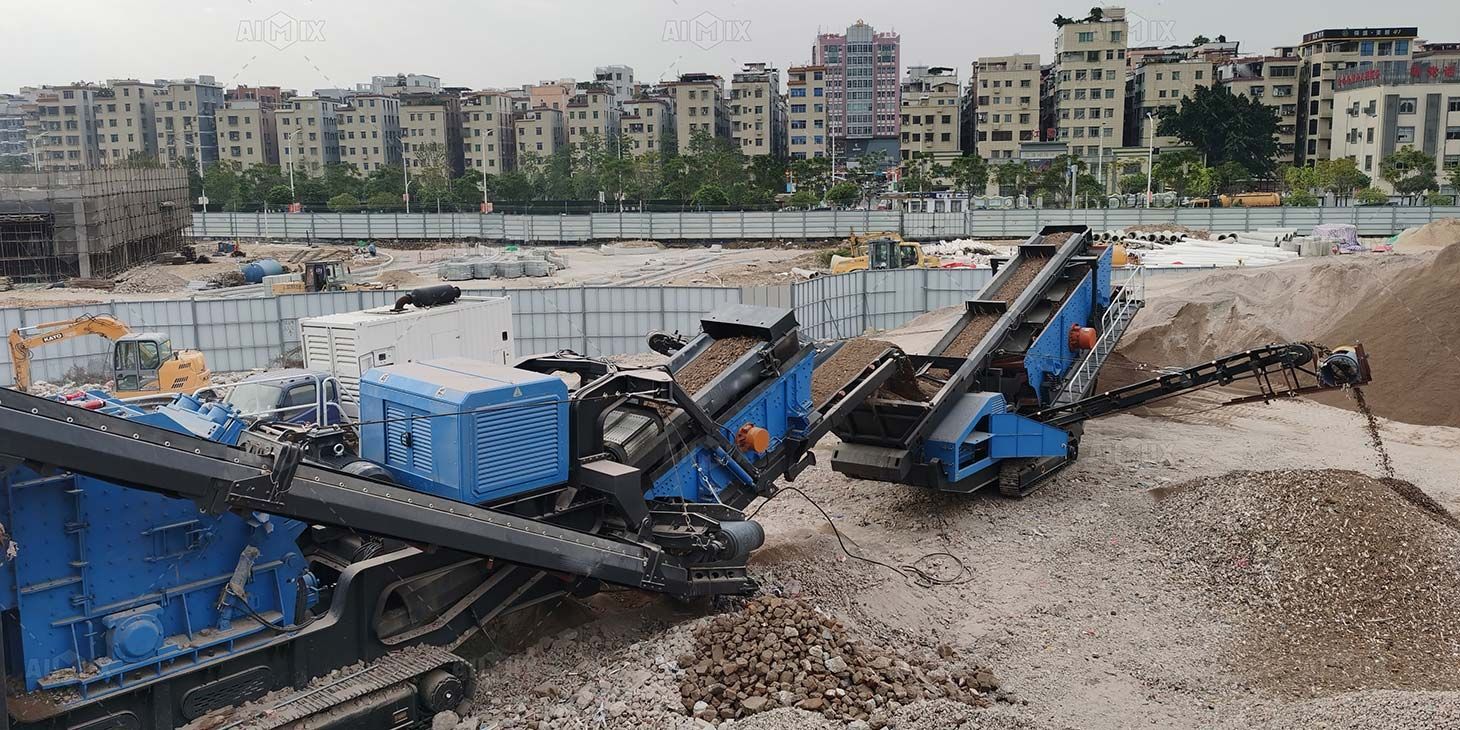
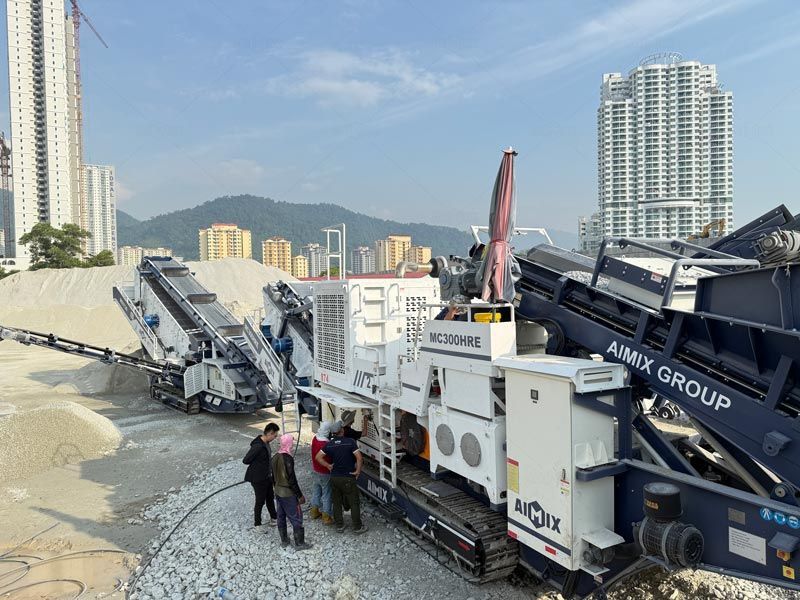
Track-mounted crushing units bring an almost nomadic quality to aggregate production. Unlike stationary crushing plants in Indonesia tethered to fixed locations, these crawler-equipped machines traverse rough terrain, scale modest gradients, and reposition themselves across active quarry faces or demolition sites with minimal setup downtime. For Indonesian operators working across islands with limited heavy-equipment infrastructure, this self-propelled mobility eliminates the need to ship raw rock to a centralized processing facility—the crusher simply goes where the rock already is.
Reducing Material Volume Through Localized Processing
Here's where the numbers get genuinely interesting. Raw quarry rock, before crushing, occupies considerable volume relative to its usable output—much of that bulk represents oversized boulders or unusable fines that would otherwise be shipped at full freight cost only to be discarded or reprocessed at the destination. By crushing at the extraction point, operators ship only graded, specification-ready aggregate, dramatically reducing the tonnage that needs to traverse those expensive inter-island routes. It's a classic case of processing intelligence trumping brute-force logistics.
Real-World Impact Across Indonesia's Construction Sectors
The theoretical cost savings sound compelling, but how does this translate into tangible outcomes across Indonesia's diverse construction landscape? The ripple effects extend well beyond simple line-item budget reductions.
Infrastructure Projects in Remote Provinces
Government-backed infrastructure initiatives in provinces like Papua, Maluku, and Nusa Tenggara have historically faced punishing material costs simply due to remoteness. Track crushers deployed alongside road-building and bridge projects allow construction teams to source aggregate from local rock formations encountered during excavation, converting what would otherwise be waste spoil into usable base material. This approach has proven particularly transformative for road infrastructure projects, where aggregate represents a substantial proportion of total material volume requirements.
Long-Term ROI and Environmental Co-Benefits
Beyond immediate cost savings, the shift toward localized crushing carries compounding long-term advantages. Reduced truck and barge traffic translates into lower carbon emissions associated with material transport—an increasingly relevant metric as sustainability certifications gain traction in regional development financing. Additionally, fleet operators report that track crushers, despite higher upfront acquisition costs compared to static alternatives, often achieve payback periods measured in single-digit project cycles when factoring in cumulative freight savings across multiple jobsites. For contractors managing portfolios spanning multiple islands, this versatility transforms a single piece of equipment into a recurring cost-avoidance engine rather than a one-off capital expense.
As Indonesia continues its infrastructure expansion across an archipelago that refuses to make logistics easy, track crushers represent more than just incremental efficiency—they signal a fundamental rethink of how aggregate supply chains should function in geographically fragmented markets. By collapsing the distance between extraction and processing, this approach turns one of the archipelago's greatest logistical liabilities into a manageable, increasingly cost-competitive component of the construction equation.