The Importance of Dust-Free Concrete Crushing Systems in Urban Demolition Waste Environments
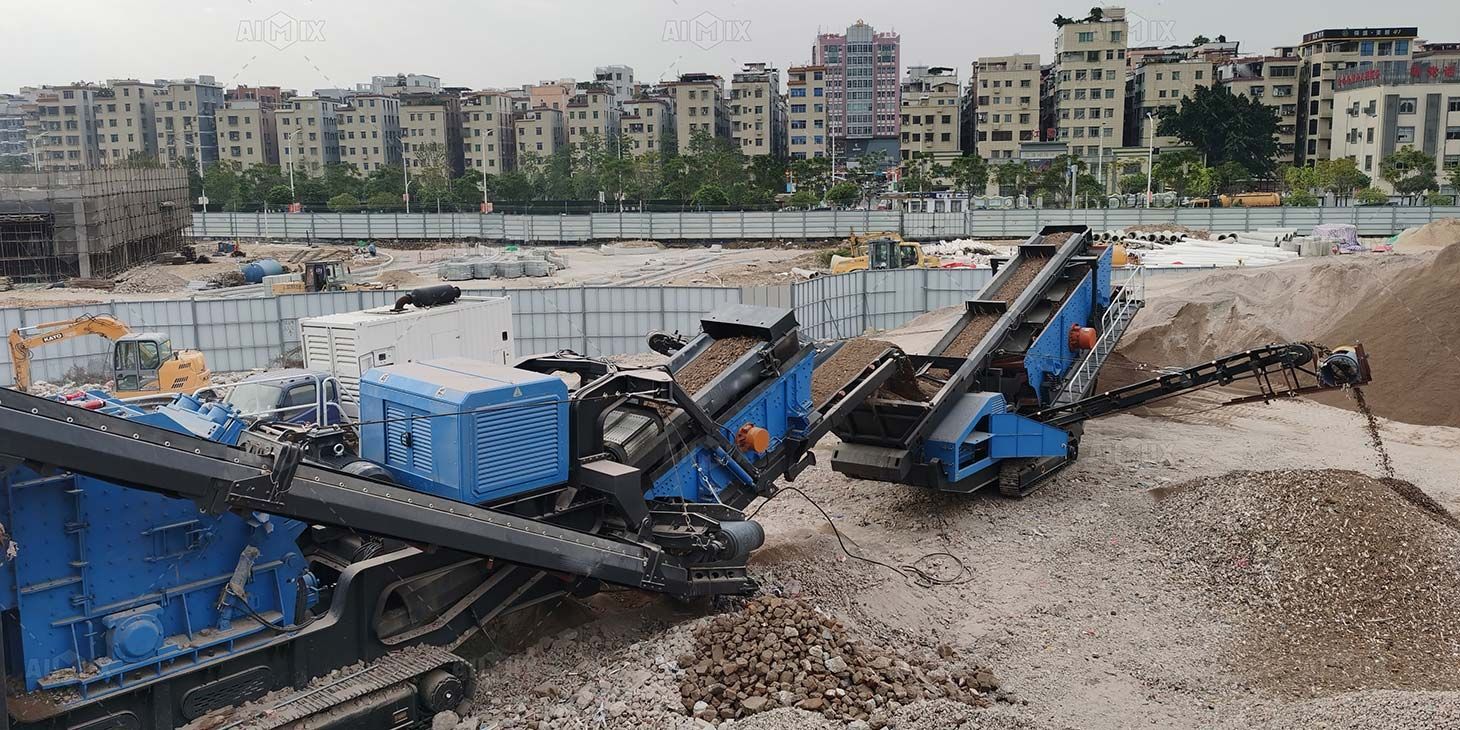
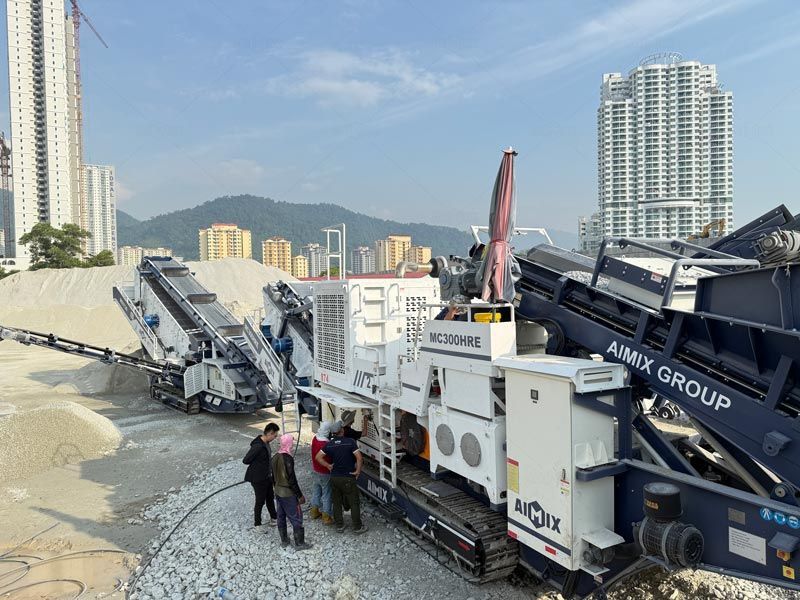
Urban demolition has become an increasingly delicate operation across rapidly densifying Latin American cities. As metropolitan centres in Mexico, Colombia, Chile, and Brazil pursue ambitious redevelopment agendas, the volume of concrete demolition waste requiring on-site processing has grown substantially. This expansion has thrust dust emission control into a position of unprecedented operational significance. Concrete crushing machine — an inherently particulate-generating process — poses considerable risk to public health, regulatory compliance, and community relations when conducted without rigorous suppression infrastructure. Understanding why dust-free crushing systems have transitioned from optional enhancement to fundamental requirement is essential for any contractor operating within dense urban demolition contexts.
Public Health Imperatives in Densely Populated Demolition Zones
Respirable Crystalline Silica Exposure and Community Risk
Concrete crushing liberates fine particulate matter containing respirable crystalline silica, a substance classified by international health authorities as carcinogenic upon prolonged inhalation exposure. In construction waste recycling environments embedded within residential neighbourhoods — a common configuration across Mexico City's Iztapalapa district, Bogotá's urban renewal corridors, or São Paulo's central redevelopment zones — uncontrolled dust plumes do not remain confined to the project perimeter. They drift across adjacent streets, infiltrate nearby residences, and settle on surfaces frequented by pedestrians, vendors, and schoolchildren. Dust-free crushing systems, incorporating water misting arrays, enclosed crushing chambers, and negative-pressure extraction units, dramatically reduce ambient particulate concentrations at source, protecting both site personnel and the broader urban population from cumulative silica exposure that conventional crushing operations would otherwise generate unchecked.
Occupational Exposure Limits and Worker Protection Standards
Beyond community-level risk, demolition crews operating crushing equipment face direct and sustained occupational exposure to airborne particulates. Regulatory frameworks across Chile, Peru, and Argentina have progressively tightened permissible exposure limits for respirable dust, aligning more closely with stringent international occupational health benchmarks. Crushing operations lacking integrated suppression technology routinely exceed these thresholds within minutes of activation, exposing operators to concentrations that accelerate the onset of silicosis, chronic obstructive pulmonary conditions, and other irreversible respiratory pathologies. Dust-free crushing systems — engineered with shrouded conveyor transitions, sealed discharge points, and continuous water atomisation — substantially attenuate this exposure pathway, enabling contractors to satisfy occupational health obligations while maintaining productive crushing throughput across extended operational shifts.
Regulatory Compliance and Urban Environmental Governance
Municipal Air Quality Ordinances Across Latin American Metropolises
Latin America's largest cities have progressively codified air quality governance frameworks that directly constrain demolition and crushing activities. Mexico City's environmental authorities enforce particulate emission ceilings tied to broader metropolitan air basin management strategies, given the capital's well-documented vulnerability to thermal inversion and pollutant accumulation. Santiago, Chile, operates under similarly rigorous atmospheric management protocols, reflecting the city's geographic susceptibility to smog entrapment within its Andean basin topography. Bogotá and Medellín have introduced construction-specific dust mitigation ordinances requiring demonstrable suppression measures as a precondition for demolition permitting. Contractors deploying dust-free crushing systems position themselves favourably within these regulatory architectures, avoiding the punitive fines, work stoppage orders, and permit revocation risks that non-compliant operators increasingly encounter as enforcement intensifies across the region.
Documentation, Monitoring, and Permit Renewal Considerations
Regulatory compliance in contemporary Latin American demolition contexts extends beyond mere equipment deployment to encompass rigorous documentation and continuous monitoring obligations. Municipal authorities in Brazil's São Paulo and Rio de Janeiro increasingly require contractors to submit particulate monitoring data — captured through portable air quality sensors positioned at site boundaries — as a condition of ongoing permit validity. Dust-free crushing systems equipped with integrated monitoring instrumentation generate the verifiable performance records that satisfy these documentation requirements, while simultaneously providing contractors with operational feedback enabling real-time suppression adjustment. This monitoring capability transforms dust management from a reactive compliance obligation into a proactive operational discipline, reducing the likelihood of regulatory infractions that could otherwise jeopardise project continuity and contractor reputation within increasingly scrutinised urban renewal markets.
Operational and Reputational Benefits Beyond Compliance
Equipment Longevity and Reduced Mechanical Wear
Dust suppression infrastructure delivers operational dividends extending well beyond regulatory and health considerations. Airborne particulate infiltration into mobile impact crusher equipment bearings, hydraulic systems, and electrical control panels accelerates mechanical degradation, generating premature component failure and elevated maintenance frequency. Dust-free crushing systems, through their enclosed processing architecture and water-based suppression mechanisms, substantially reduce ambient particulate ingress into sensitive mechanical assemblies. Contractors operating across Colombia, Chile, and Mexico report measurably extended service intervals and reduced unplanned downtime when transitioning from conventional open-air crushing configurations to enclosed, dust-suppressed alternatives — a maintenance economy that compounds favourably across sustained urban demolition programmes.
Community Relations and Contractor Reputation Management
In urban demolition contexts where project sites operate in immediate proximity to residential communities, commercial establishments, and civic institutions, visible dust plumes generate disproportionate reputational damage regardless of actual health impact severity. Contractors whose operations produce minimal visible particulate emission cultivate stronger community relations, encounter fewer neighbour complaints lodged with municipal authorities, and experience reduced likelihood of activist or media scrutiny that has, in several documented instances across Latin American cities, escalated into costly project delays or contract terminations. Dust-free crushing systems thus function not merely as compliance instruments but as strategic reputational assets, enabling contractors to sustain the social licence to operate that increasingly determines commercial viability within Latin America's politically attentive and environmentally conscious urban redevelopment landscape.