Mini Concrete Batch Plant for Sale: Will 20 m³/Hour Meet Your Schedule?
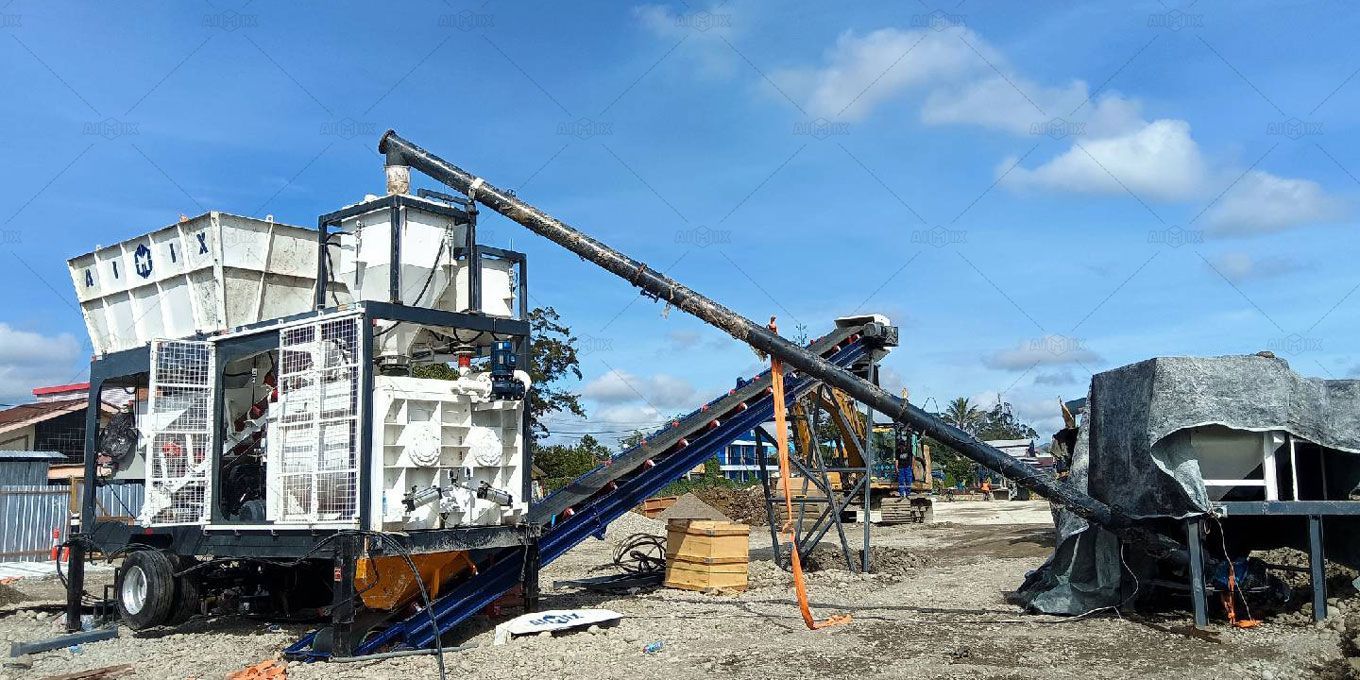
Let's get one thing cheerfully out of the way: the answer is not always yes — and not always no. A 20 m³/hour mini concrete batch plant for sale is one of the construction industry's most genuinely useful compact investments, but it arrives with a production ceiling that either fits your project rhythm beautifully or creates a bottleneck that compounds across your entire schedule. The difference between those two outcomes is not luck. It is calculation. Before any purchase decision is made, the output number deserves honest scrutiny against the concrete demand reality of your specific operation — not an optimistic estimate, and not a worst-case catastrophe scenario either, but the actual daily and weekly volumes your projects require to stay on schedule and on budget.
The good news is that for a surprisingly broad range of project types, 20 m³/hour is not a limitation — it is a well-matched capability delivered in a compact, cost-efficient, and highly mobile package. The key is knowing whether your project falls inside that range or outside it, and having the analytical framework to make that determination confidently before committing capital to a purchase.
Understanding What 20 m³/Hour Actually Delivers in Real Operating Conditions
Rated output and operational output are two different numbers, and conflating them is one of the more consequential errors in batch plant capacity planning. A 20 m³/hour rating represents the plant's theoretical maximum throughput under ideal conditions — consistent material supply, no mix design changeovers, continuous operation, and a well-calibrated batching system running without interruption. Real operating conditions introduce efficiency factors that reduce effective output below that theoretical ceiling.
Aggregate supply interruptions, operator changeover time between mix designs, batching system calibration checks, and the inevitable minor stoppages of any mechanical system typically produce real-world efficiency factors between 70 and 85 percent of rated capacity for well-managed mini plant operations. Applied to a 20 m³/hour rating across an eight-hour shift, this translates to an effective daily output range of approximately 110 to 135 cubic meters under normal operating discipline. That is a meaningful production volume. It comfortably supports residential construction programs, small infrastructure works, precast component production, and site concrete supply for projects where pours are sequenced rather than simultaneous.
Where 20 m³/hour begins to strain against schedule requirements is on projects demanding large monolithic pours — raft foundations, bridge decks, retaining wall lifts — where volume requirements within a single continuous pour window exceed what the small concrete batch plant for sale can deliver before initial set begins to compromise the structural integrity of the placement. Knowing your largest single pour requirement is therefore the first and most important capacity check against the 20 m³/hour specification.
The Project Types Where a Mini Plant Wins the Schedule Argument
Arguing that a 20 m³/hour plant cannot meet every schedule is easy and largely beside the point. The more productive argument is identifying the project categories where this capacity level is not merely adequate but genuinely optimal — delivering production efficiency, capital economy, and operational flexibility that larger plants cannot match at comparable investment levels.
Housing and residential development programs represent the clearest category of strong fit. Individual foundation pours, slab-on-grade placements, column bases, and ring beam works on a typical residential project rarely exceed 30 to 50 cubic meters per individual pour event. A 20 m³/hour plant handles these comfortably within normal working hour constraints, with capacity to spare for the concurrent small works — aprons, paths, drainage structures — that a residential site generates continuously throughout the construction program.
Rural and remote infrastructure projects present another compelling case. Where ready-mix supply is geographically impractical or economically prohibitive, a mini batch plant establishes on-site production independence that changes the project economics entirely. The compact footprint and relatively straightforward mobilization requirements of a 20 m³/hour plant make it transportable to sites that larger equipment cannot reach without disproportionate logistics investment. In this context, 20 m³/hour is not a compromise — it is the capability that makes the project viable at all.
Precast production operations with daily output targets in the 80 to 120 cubic meter range also align well with the mini plant's effective daily output envelope. The controlled production environment of a precast yard, with consistent mix designs and predictable batching sequences, allows the plant to operate at high efficiency factors that push effective output toward the upper boundary of its realistic daily range.
When 20 m³/Hour Creates a Schedule Risk You Cannot Afford to Ignore
Intellectual honesty demands acknowledging the scenarios where a 20 m³/hour plant is genuinely the wrong tool. Large infrastructure contracts with continuous pour requirements — major bridge substructures, dam spillways, runway pavements — generate single-event concrete demand that exceeds the mini plant's daily output envelope entirely. Attempting to meet these requirements with undersized production capacity either forces the contractor into cold joint risk through extended pour durations, or into supplementary ready-mix procurement that undermines the cost rationale for plant ownership in the first place.
High-rise structural concrete programs, where floor cycle times demand repeated large-volume pours on compressed schedules, similarly exceed what a single 20 m³/hour plant can reliably support without creating the kind of production-driven schedule pressure that ripples destructively through every downstream trade on the project. In these environments, either a higher-capacity stationary concrete batching plant or a multi-unit mini plant configuration is the technically correct answer — and the budget should reflect that reality from the outset rather than discovering it after a schedule slip has already occurred.
The cheerful conclusion is simply this: a 20 m³/hour mini concrete batch plant is a genuinely excellent investment for the right project profile, and an avoidable mistake for the wrong one. Calculate your actual demand, test it honestly against the plant's effective output envelope, and the answer to the schedule question becomes clear, specific, and entirely actionable. That is the kind of clarity that makes confident procurement decisions possible — and confident project delivery even more so.